
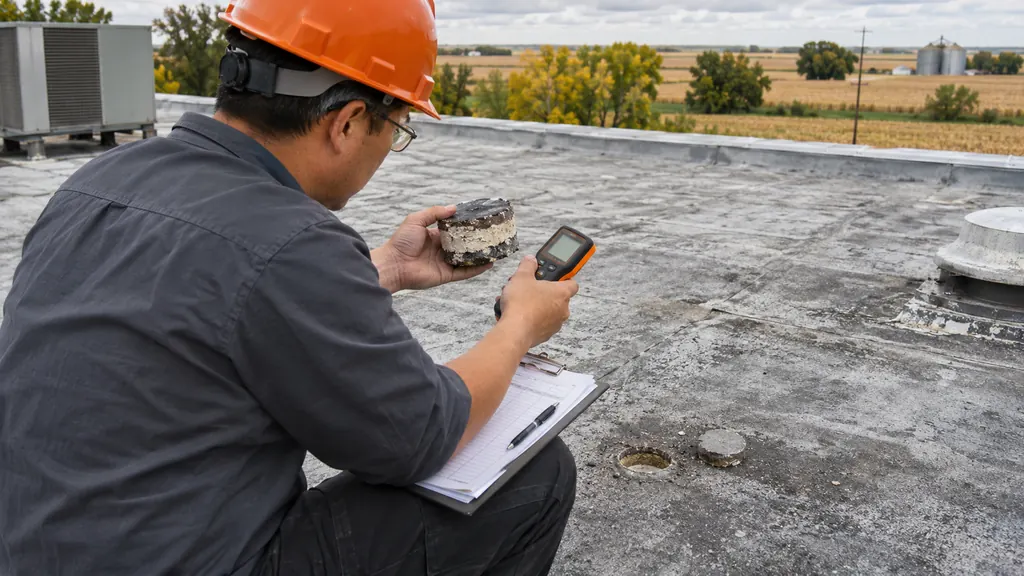
Spot Repairs Fit
- Where It Leaks
- Fan curbs, stacks, pipe stands
- Underneath
- Deck solid, board dry
- Roof Surface
- Wear limited to equipment zones
- Past Patches
- Repairs holding, a few aging
- Next Step
- Reflash curbs, patch, add pads
Industrial Roof Repair
As a Columbus industrial roof repair contractor, we fix curbs, pipe stands, and residue-worn roofing on plant roofs, planned around your production schedule.
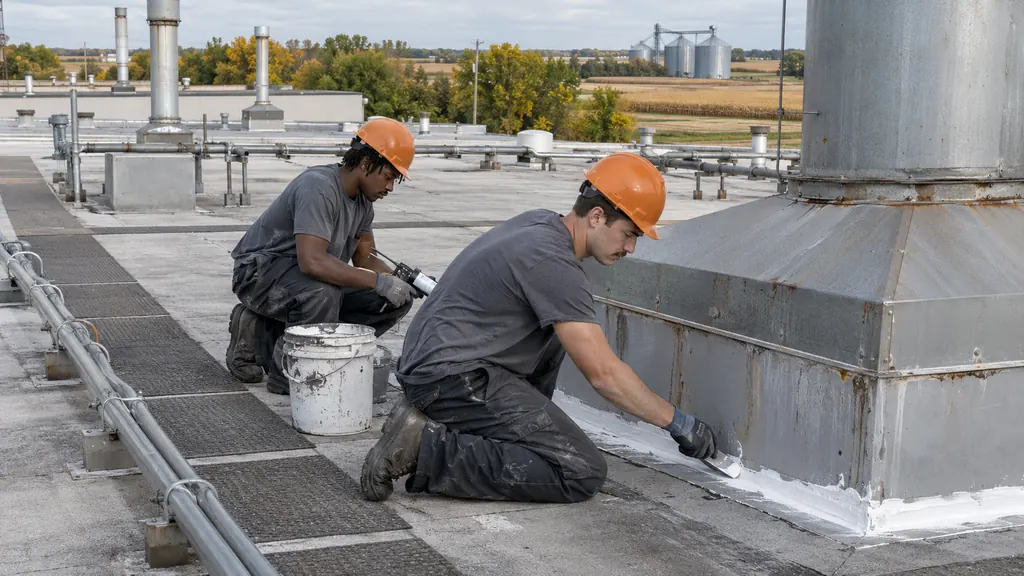
Fit Check
Columbus industrial roof repair fits a plant roof whose damage sits around equipment. Wide residue damage or wet bays call for rebuilding a section.
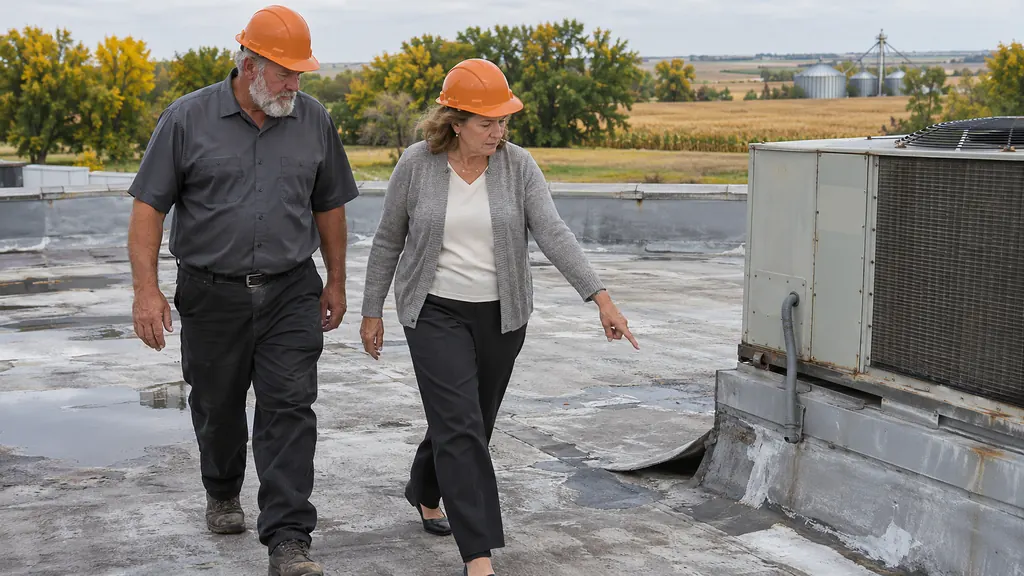
Plant Roof Conditions
Plant roofs wear around the equipment that sits on them. These are the conditions we repair on industrial roofs.
Exhaust
Equipment
Foot Traffic
Weight
Process Residue
Repair Options
Each repair matches an equipment zone or a wear pattern on the plant roof.
| Repair | When It Fits | What We Do |
|---|---|---|
| Fan Curb Reflash | Peeling flashing at exhaust fans | New curb flashing, damaged roofing downwind replaced |
| Residue Protection | Grease or chemical exhaust | Containment pads or trays under the discharge, worn surface repaired |
| Pipe Stand Repair | Supports cutting or lifting the roof | Stands reset on pads, flashing rebuilt at each one |
| Walkway Pads | Worn paths to equipment | Pads installed along the routes staff use most |
| Penetration Details | New units, stacks, or conduit | Each new penetration flashed into the existing roof |
Why Repair
Plant roofs protect production. Repairing them in the right order keeps both running.
Repairs are planned by zone and shift, so lines under the roof stay running while we work above them.
Sealing curbs and stands keeps water off panels, motors, and product on the floor below.
Pads and trays under exhaust keep oil and chemicals from eating into the roof surface around the fans.
Photos and notes on every curb and stand give your maintenance staff a record to plan from.
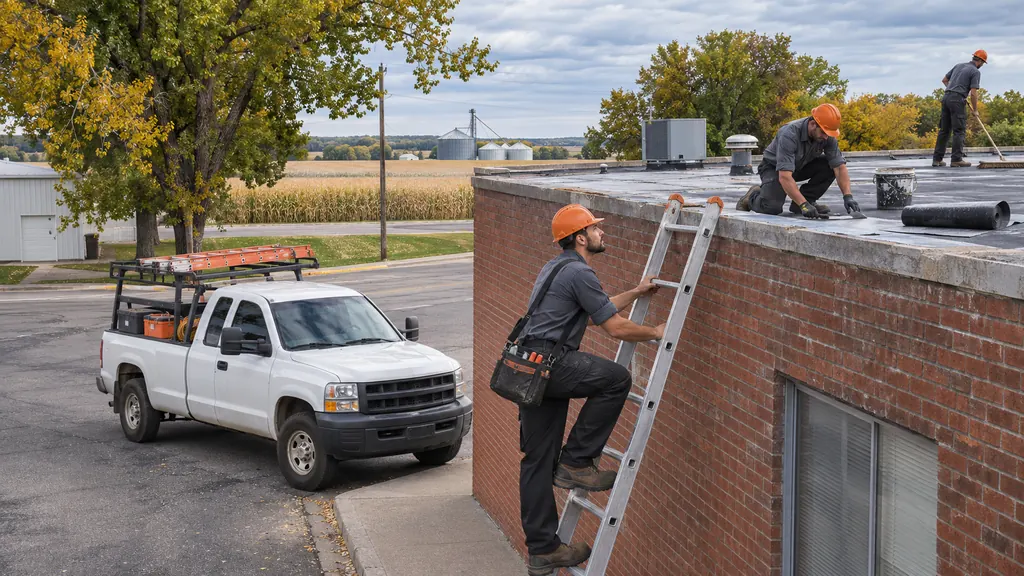
Dark, soft roofing downwind of a fan is breaking down. Get an estimate, and we will check the curb and the roof around it.
Get A Free EstimatePlant Repair Steps
Plant roofs need safety and scheduling built into the repair, so those come first.
Rules
We go over your safety rules, hot work permits, and shift schedule before anyone goes on the roof.
Survey
Equipment supports, pipe stands, conduit, fans, and drains get checked. Inside, we look at the deck for rust and stains.
Rank
Each finding is photographed and ranked, so active leaks over equipment go first and wear items follow.
Protect
Barricades, covered equipment, and marked drop zones protect the floor. Crews tie off near edges and skylights.
Repair
Curbs, stands, and worn roofing get repaired zone by zone with materials suited to the heat and residue there.
Related Services
Plants often have office wings, metal additions, and leaks that need tracing first.
Steel roofs on plant additions and storage buildings get fastener and lap repairs.
Metal roof repair in ColumbusFlat roofs over offices and break rooms get seam and drain repairs.
Flat roof repair in ColumbusDrips over equipment with no clear source get traced back to the opening.
Roof leak repair in ColumbusPlant Roof Questions
Answers on plant roofs, safety, and maintenance.
Each leak gets traced, then the seam, flashing, or penetration behind it gets repaired. Plant roofs carry heavy equipment, piping, and exhaust that make the work slower, so we plan around production, cover equipment below, and use materials made for the heat and chemicals on that roof.
We start at the fan curb and the roof surface downwind of it. Exhaust carries heat, oil, and residue that soften roofing. Damaged flashing is replaced, the curb resealed, and degraded membrane or metal nearby repaired. Pads or trays under the discharge catch residue going forward.
Maintenance visits clear drains, reseal flashing, tighten fasteners, and repair small damage before it grows. Process debris and residue get removed so they stop holding water. Walkway pads protect the busiest paths to equipment, and each visit is photographed so changes are easy to track.
Beyond the roofing, we check equipment supports, pipe stands, and conduit for loose anchors and worn flashing. Exhaust residue, added weight, and traffic paths are noted. Inside, the deck gets checked for rust and stains. Findings are photographed and ranked by urgency.
Barricades, covered equipment, and marked drop zones protect the floor below. Crews tie off or use guardrails near roof edges and skylights, and hot work follows your plant's permit process. We review your safety rules and shift schedule before starting so repairs and production stay apart.
Tell us what sits on the roof and where water reaches the floor. We will plan the repair around your shifts.