
Hail
Bruised Membrane and Dented Flashing
- You See
- Dark dimples on the membrane and dents along metal edge trim after a storm.
- What It Means
- Hail cracks the membrane surface and loosens seams, so water finds the breaks over the next few rains.
Columbus, Nebraska
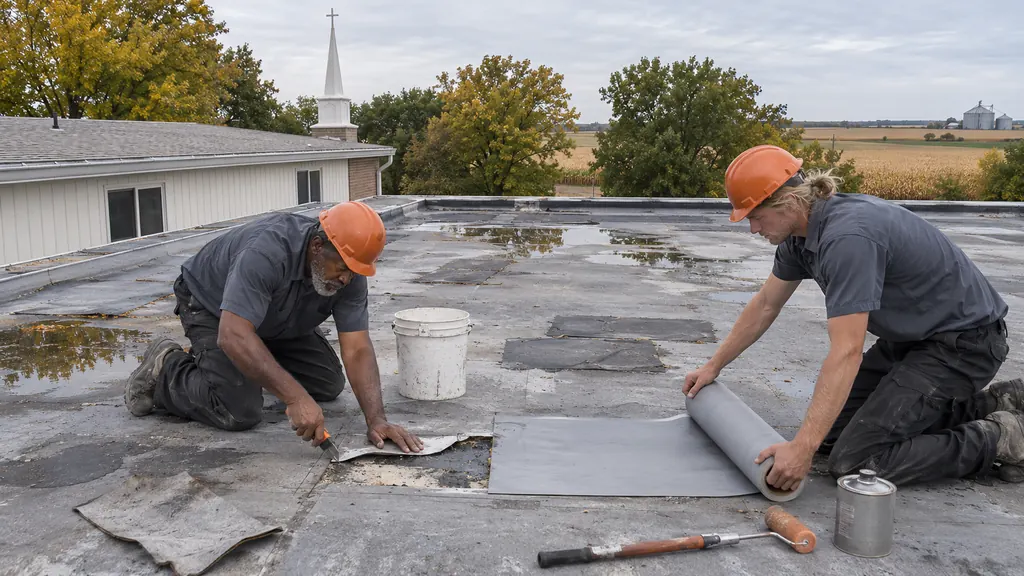
We handle Columbus commercial roof repair on flat, metal, and plant roofs. We find where water gets in, fix that spot, and check the insulation around it.
What We Find
Columbus commercial roof repair calls start with one of these conditions. Each one has a cause you can name, and the cause decides the repair.
Hail
Debris
Age
Freeze
Equipment
Wind
Repair Or Replace
Most Columbus roofs we walk need repair in a few spots. A few need replacement. The roof itself tells us which, once we check the insulation.
Our Services
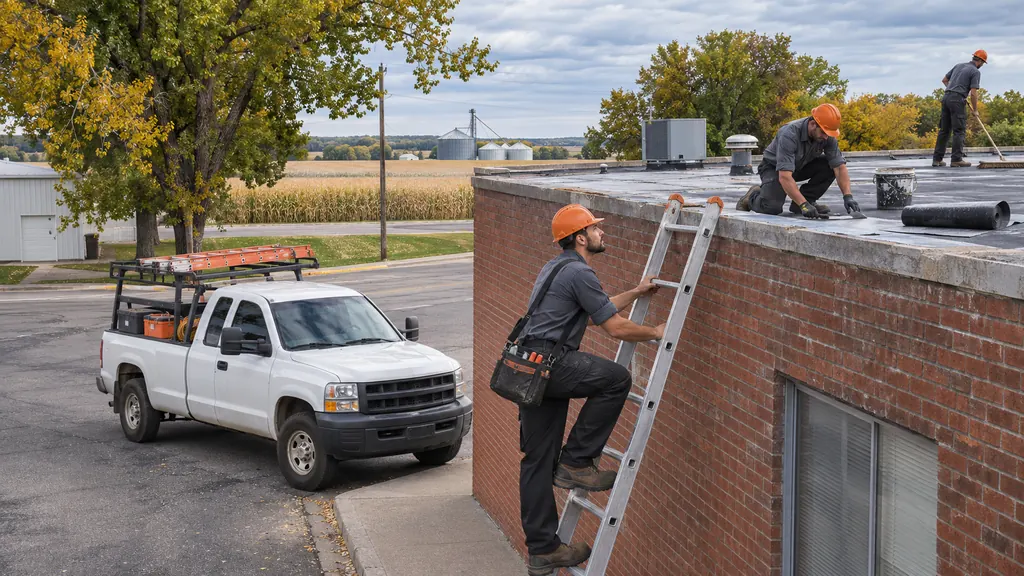
Four repair services cover the roofs in town, from flat shops downtown to steel warehouses and plant roofs. Each card shows what you see and what we do about it.
Water standing near a drain days after rain
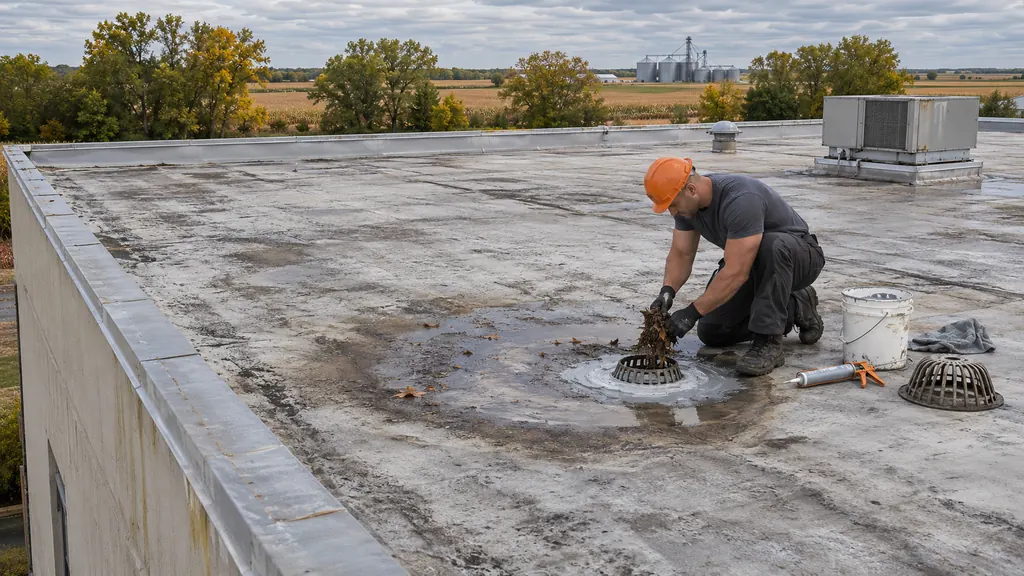
Membrane and built-up roofs on shops, offices, garages, and storefront blocks, where seams, drains, and wall flashing do most of the leaking.
Repair Includes
Rust at panel laps and drips along a screw line
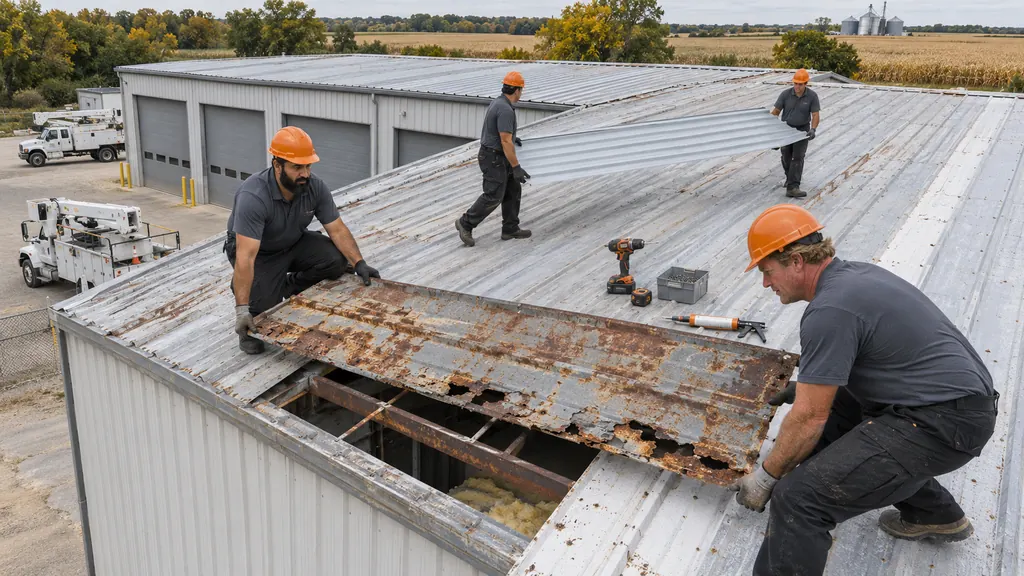
Exposed-fastener and standing-seam roofs on warehouses, ag buildings, and shops, where washers, end laps, and trim wear first.
Repair Includes
A brown ring on the ceiling tile under the roof
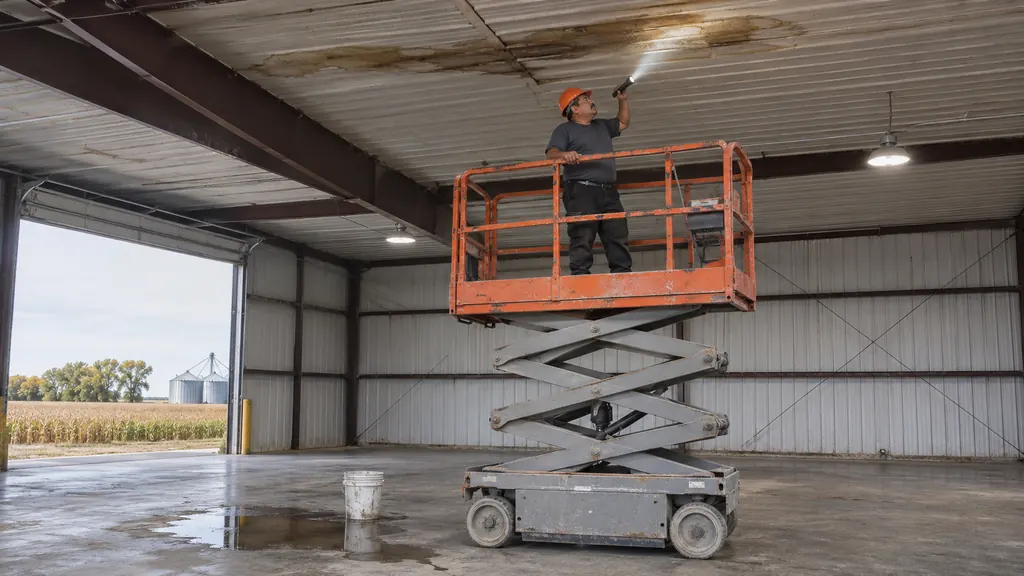
Any roof type when water shows inside and the source is unclear. We trace the path from the stain back to the opening on the roof.
Repair Includes
Residue and wear downwind of an exhaust fan
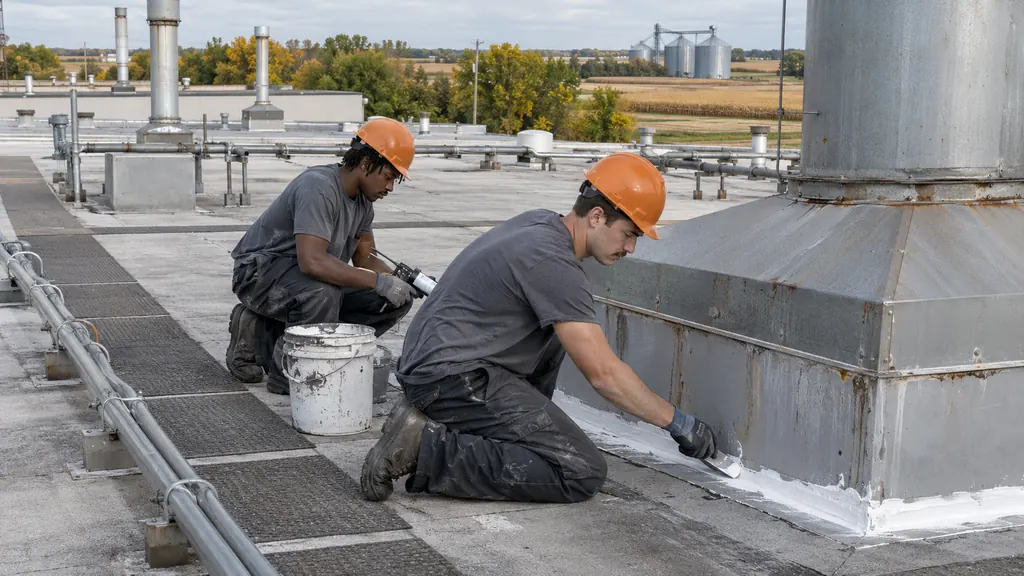
Plant roofs carrying fans, stacks, pipe stands, and conduit, where heat, oil, and foot traffic wear the roof around the equipment.
Repair Includes
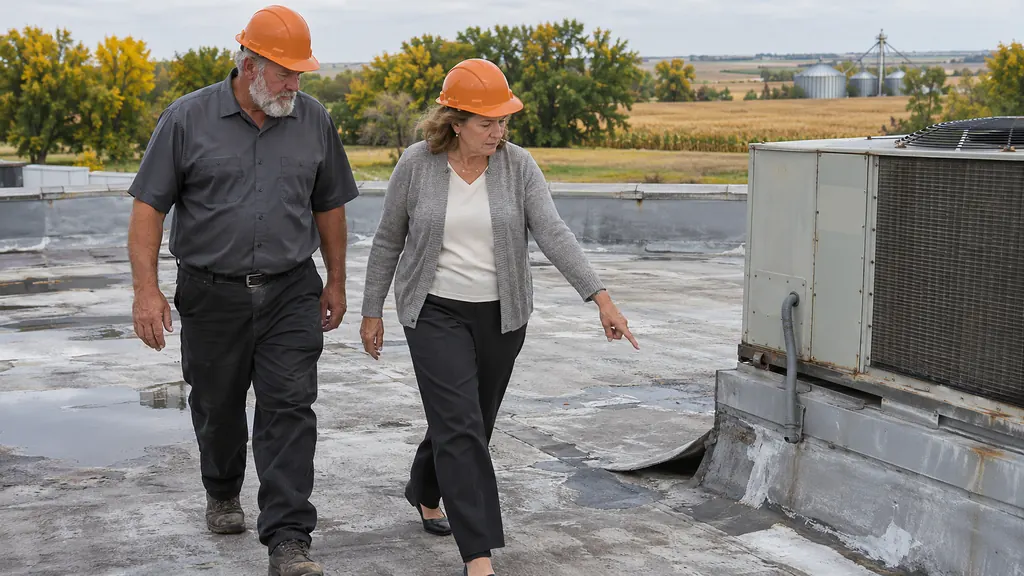
Call and tell us where the water lands and what the roof is made of. A temporary seal comes first, then the permanent repair once the roof dries.
Call UsHow It Works
Each visit follows the same five steps, so you know what happens on the roof and what you get when we climb down.
Job Ticket
Walk
Inside first: we mark every stain, drip, and rusty deck spot. Then we walk the roof above those marks and check seams, curbs, drains, and edges.
Trace
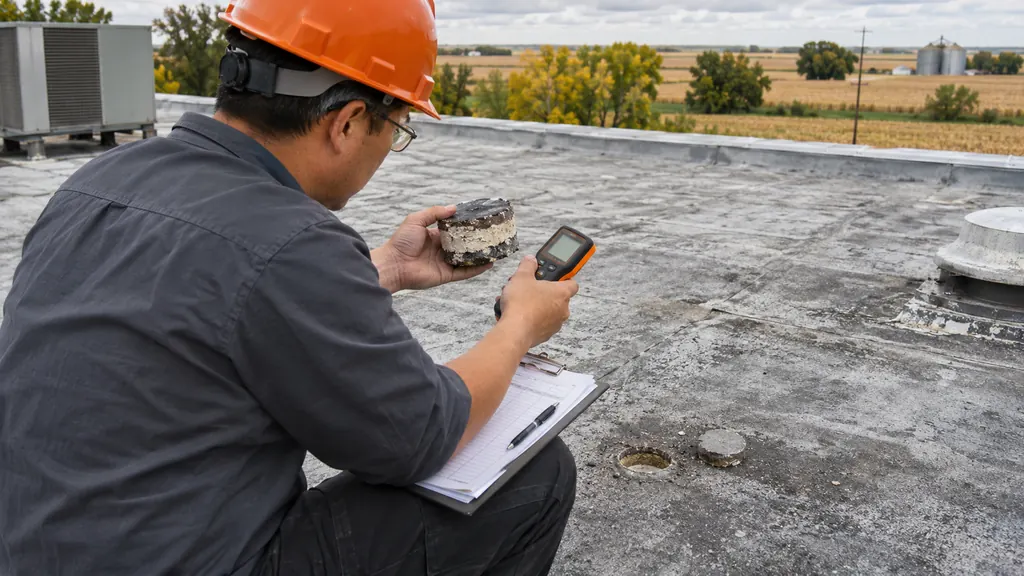
Water runs under membrane before it drips, so we search upslope from the stain. A core cut or moisture meter shows where the insulation is wet.
Plan
You get photos of each problem and a short list in the order we would fix them. Active leaks go first, wear items after.
Fix
TPO gets TPO, EPDM gets EPDM, and steel panels get the same profile and gauge. Wet insulation under a repair is cut out and replaced.
Test
Drains get flushed and repaired seams get probed. On stubborn leaks we water-test the area before calling the job done.
Why Repair
Fixing the right spot early keeps a roof working for more seasons. These are the gains owners notice first.
A seam fixed this month keeps water out of the insulation board below it. Wet board is what turns a patch job into a tear-off.
Repairs happen section by section on the roof. Loading docks, offices, and sales floors stay open while we work above them.
Core cuts and photos show which spots leak and which only look worn, so the budget covers the openings that let water in.
Each repair is photographed and logged by location. The next inspection starts from that record instead of from scratch.
Service Area
Not sure your building is in our area? Please call us or send us a message. We repair commercial roofs in Columbus, Schuyler, David City, Albion, Stanton, and Fullerton.
Common Questions
Short answers first, then the detail. The full list is on the FAQ page.
It comes down to how much of the roof is still dry. When the leaks trace to a few seams, curbs, or drains and the insulation around them is dry, repair is the right call.
When wet board spreads across sections or the membrane has gone brittle, we tell you so and help you keep the roof watertight while you plan.
The first visit stops the water with a temporary seal: a membrane patch, a tarp, or a sealant that works in that day's weather. Then we help you protect stock and equipment under the leak. The permanent repair waits until the roof is dry and we can measure the full damage.
Water slips under the membrane or along a panel lap before it finds a seam in the deck below. It can run several feet before it drips. That is why we start at the stain, then search upslope on the roof and confirm wet insulation with a core cut or meter.
We check the surface, seams, flashing, drains, and every penetration, then look inside for stains, rust on the deck, and signs of wet insulation. Each problem is photographed and noted by location. You get a short repair list in priority order. Spring and fall visits catch storm and winter damage early.
Some do and some do not, so the Columbus Building Department is the place to confirm before work starts. When a permit is needed, it has to be filed by a contractor registered with the city, and the work has to begin within the permit's time limit.
Tell us what the roof is doing and where the water shows. We will set a time to walk it and send you photos of what we find.