
Repair Fits
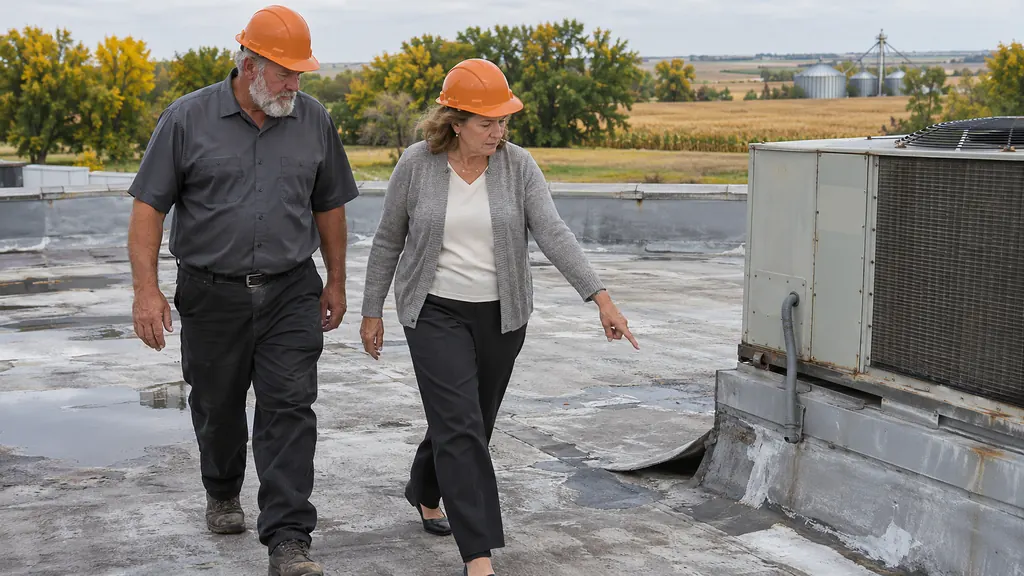
- Where It Leaks
- Screw lines, end laps, trim, boots
- Underneath
- Purlins solid, insulation dry
- Roof Surface
- Surface rust, steel still firm
- Past Patches
- Old sealant, no failing patches
- Next Step
- Refasten, reseal, replace a few panels
Metal Roof Repair
As a Columbus commercial metal roof repair contractor, we replace worn fasteners, reseal end laps, and swap rusted-through panels on warehouses and shops.
Fit Check
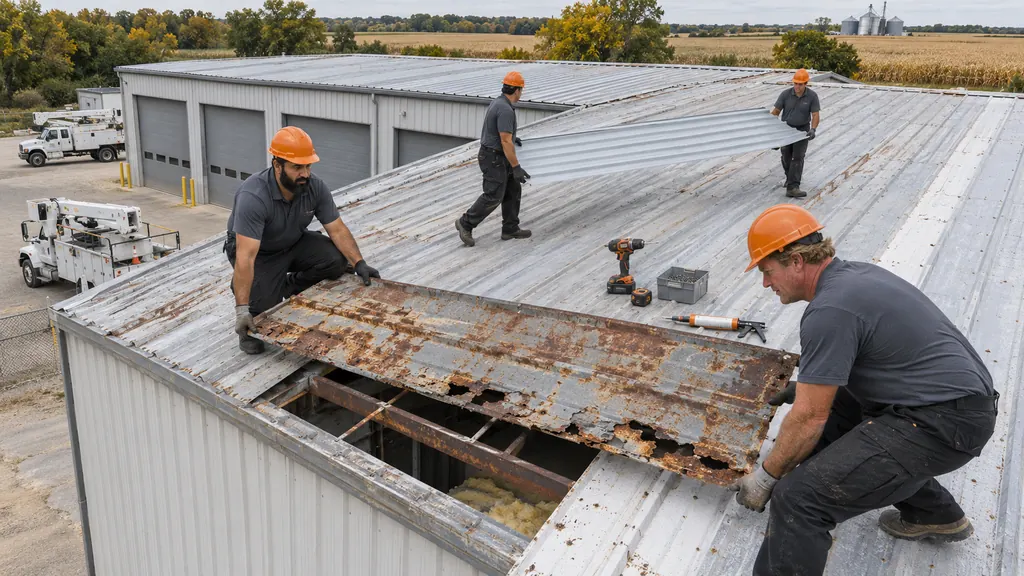
Columbus commercial metal roof repair fits steel that still holds a screw. Panels that are rusted through across the roof call for a different plan.
Roof Conditions
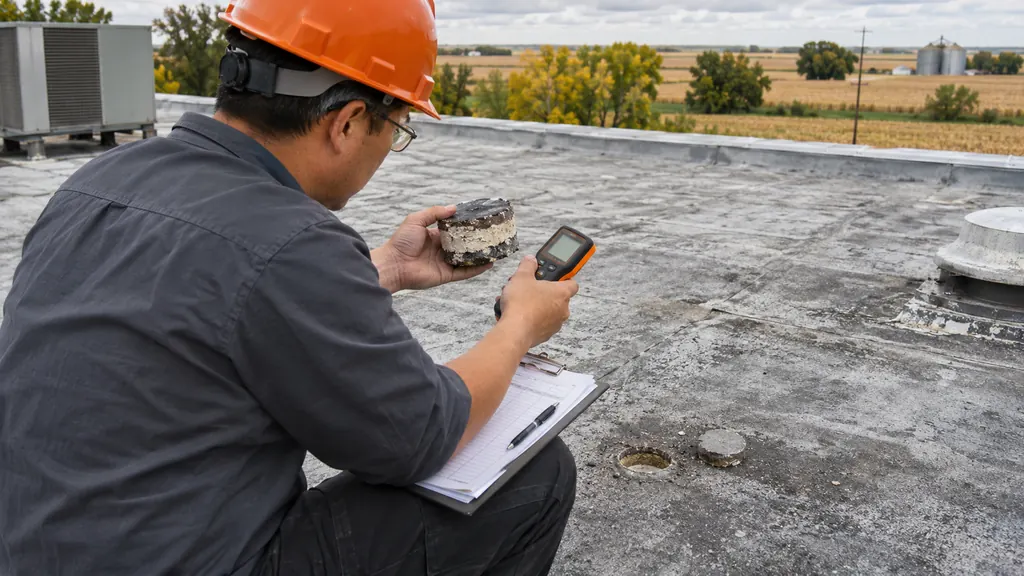
Steel roofs leak at joints and fasteners far more often than through the panel itself. These conditions account for most of the metal roof calls we get.
Sun and Cold
Movement
Rust
Equipment
Wind
Repair Options
Each repair targets one joint or part of the panel system. Most metal roofs need two or three of these at once.
| Repair | When It Fits | What We Do |
|---|---|---|
| Fastener Replacement | Dried washers, backed-out screws | Remove old screws, install new ones with fresh washers, oversize where holes have stripped |
| End Lap Reseal | Leaks at panel overlaps | Clean out old sealant, add butyl tape, refasten the lap with new stitch screws |
| Panel Swap | Rust holes or soft steel | Cut out the failed panel, install one of matching profile and gauge, seal both laps |
| Boot And Curb Reflash | Leaks at pipes, vents, and units | New boots sized to the pipe, curb flashing rebuilt, diverters above curbs |
| Trim And Closures | Wind damage at ridge, rake, or eave | Refasten or replace trim, install new foam closures under ridge cap |
Why Repair
A steel roof with solid panels can keep working for a long time once the joints are tight again.
Most of the steel on an aging roof is still good. Replacing washers and lap sealant keeps those panels in service.
Water sitting at a leaking screw rusts the panel and the purlin under it. Sealing the hole stops that cycle.
Warehouses and ag shops store things a drip can ruin. A tight screw line keeps water off pallets and machines.
New panels match the old profile and gauge, so laps close properly and the roof drains the way it was built to.
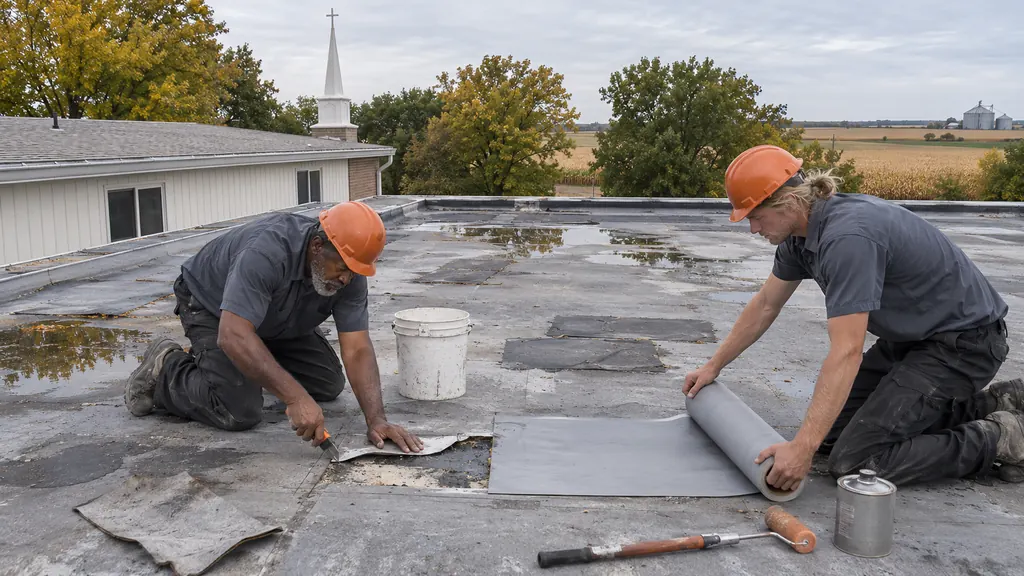
Rust under the screw heads means the washers have given out. Ask for an estimate and we will check the fasteners row by row.
Get A Free EstimateRepair Steps
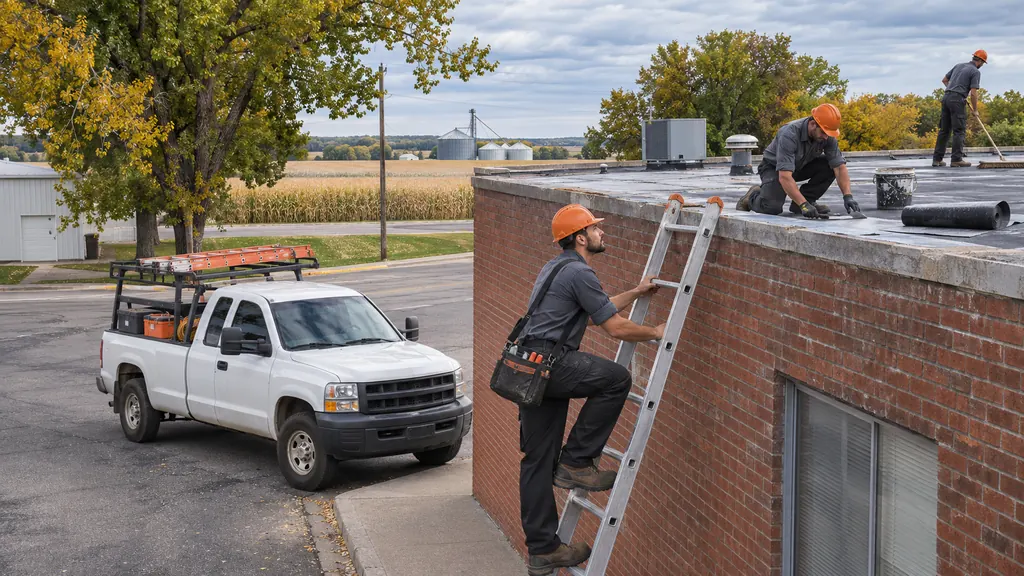
We work row by row, lap by lap, so nothing on the roof gets skipped.
Survey
Each screw line, end lap, and piece of trim gets checked. Problem spots are marked on the roof and photographed.
Inside
Stains and rust on the purlins below show which screw lines and laps are leaking now and which are close.
Fasten
Old screws come out and new ones with fresh washers go in. Stripped holes take an oversized screw into solid steel.
Seal
End laps get new butyl and stitch screws. Cracked pipe boots and loose curb flashing are replaced.
Swap
Panels with holes or soft steel are cut out and replaced with matching profile and gauge, sealed at both laps.
Related Services
Steel buildings often carry a flat section, a plant roof, or a leak that needs tracing first.
Drips that do not line up with a screw row get traced back to the real opening.
Roof leak repair in ColumbusFlat roofs on offices and additions beside a metal building get seam and drain repairs.
Flat roof repair in ColumbusPlant roofs with fans and stacks on steel decks get curb and residue repairs.
Industrial roof repair in ColumbusMetal Roof Questions
What owners of steel buildings ask us before a repair.
Fasteners. Each screw seals with a small rubber washer, and sun and cold harden that washer within a few years. Panel movement then works the hole larger. End laps, trim, and pipe boots are the next places we look, row by row.
Pull the old screw and drive a new fastener with a fresh washer. A hole that has stripped takes an oversized screw into solid metal. Holes left from removed equipment get sealed and covered with a metal patch, and each repaired screw head gets sealant over the washer.
Surface rust gets cleaned and treated. Rust that has made holes, flaking layers, or soft spots that will not hold a screw means that panel comes out. New panels match the profile and gauge so the laps close and seal properly.
Old sealant is cleaned out of the lap, new butyl tape goes in where the lap can be opened, and the lap is refastened. Exposed seams that cannot be opened get reinforcing fabric and sealant on top. On long warehouse runs we check every lap from eave to ridge.
Cracked pipe boots get replaced with boots sized to the pipe, and curb flashing is rebuilt so the steel can still move. Where water stacks against the uphill side of a curb, a diverter sends it around. Every vent and conduit on the roof gets checked.
Tell us what kind of steel roof you have and where the drips land. We will walk the panel runs and send photos.