
Repair Fits
- Where It Leaks
- A seam, drain, curb, or wall base
- Underneath
- Dry board, confirmed by a core cut
- Roof Surface
- Membrane still flexible when folded
- Past Patches
- One or two patches, holding
- Next Step
- Patch, reflash, and clear the drains
Flat Roof Repair
As a Columbus flat roof repair contractor, we fix membrane seams, drains, and wall flashing on shops, offices, and garages, then check the board underneath.
Fit Check
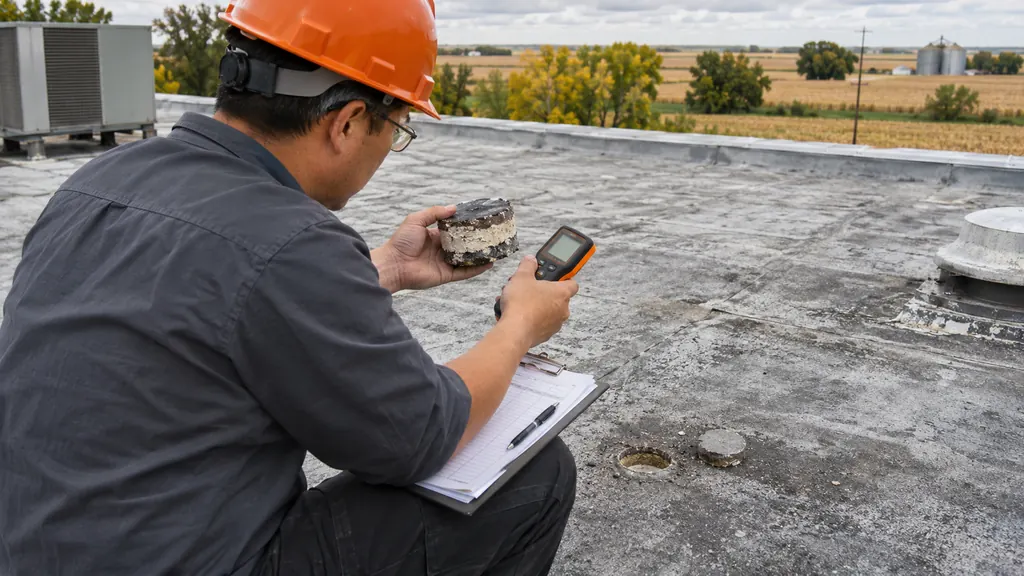
Columbus flat roof repair fits a roof whose membrane still bends and whose insulation is dry around the leak. Hold your roof up against both columns.
Roof Conditions
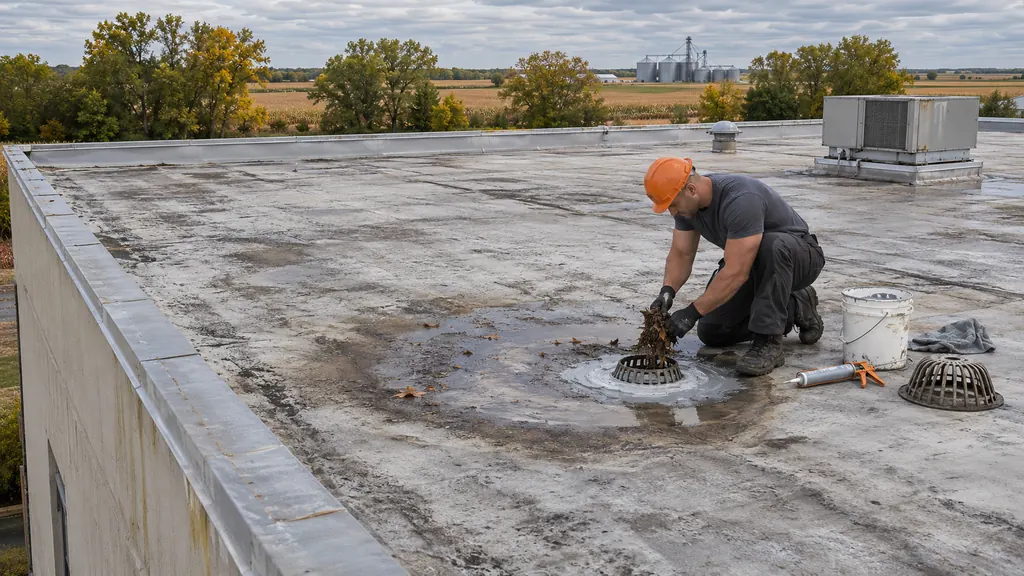
Flat roofs fail at a short list of places. These are the ones we repair most, grouped by what drives the damage.
Debris
Low Spots
Heat
Movement
Age
Repair Options
Each flat roof repair matches a specific failure. The membrane type decides the patch material.
| Repair | When It Fits | What We Do |
|---|---|---|
| Seam Patch | A short open lap on TPO, EPDM, or PVC | Clean, prime, and cover the lap with matching membrane or seam tape |
| Puncture Patch | Tool drops, foot traffic, or hail breaks | Round-cornered patch over the hole, edges sealed or welded |
| Drain Rebuild | Water leaking at the drain bowl | Pull the clamping ring, replace torn membrane, reset with new sealant |
| Wall Reflash | Base flashing loose at a parapet or door header | New base flashing fastened at the top edge with a termination bar |
| Wet Area Cutout | Core cut shows soaked insulation | Remove wet board, install new board and membrane, seal the edges |
Why Repair First
A good flat roof repair buys years on a roof that is mostly dry. These are the gains that matter on a working building.
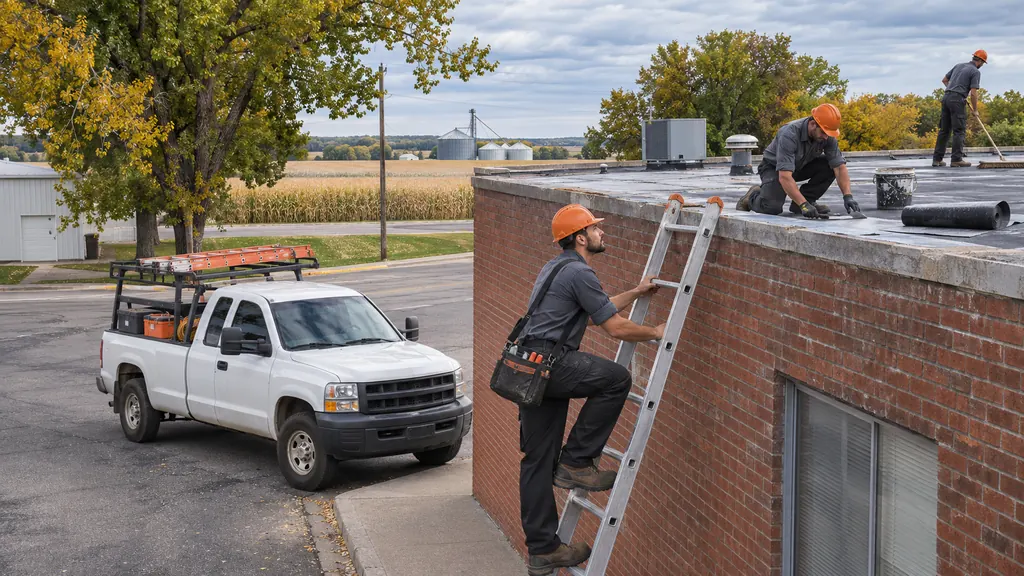
One drain or a few laps is a short visit. The rest of the membrane keeps doing its job while the weak spots get fixed.
Stopping water at the seam keeps it out of the insulation and off the steel deck, where rust and sag start.
Membrane repairs are quiet work. Bays, offices, and sales floors under the roof stay open the whole time.
Photos and core results show how much life the membrane has left, so a future replacement comes with a real timeline.
Ponding near a drain usually means a blocked strainer or a low spot. Send us a photo or call, and we will check the drain and the membrane around it.
Get Free EstimateRepair Steps
Five steps, in the same order on every flat roof, from the stain inside to the water test on top.
Inside
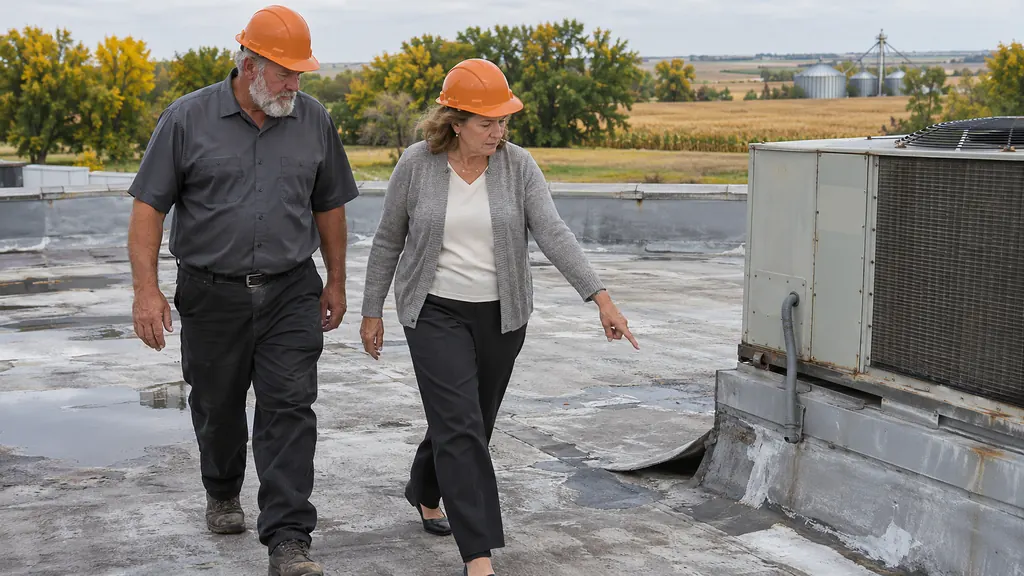
Ceiling tiles, deck rust, and drip points get marked and photographed. Their pattern tells us which area of the roof to search.
Probe
We probe seams, check flashing at walls and curbs, and look for punctures in the area over the stains. Drains get opened.
Core
A small core cut or meter reading shows whether the board under the leak is wet. Wet board gets cut out before patching.
Patch
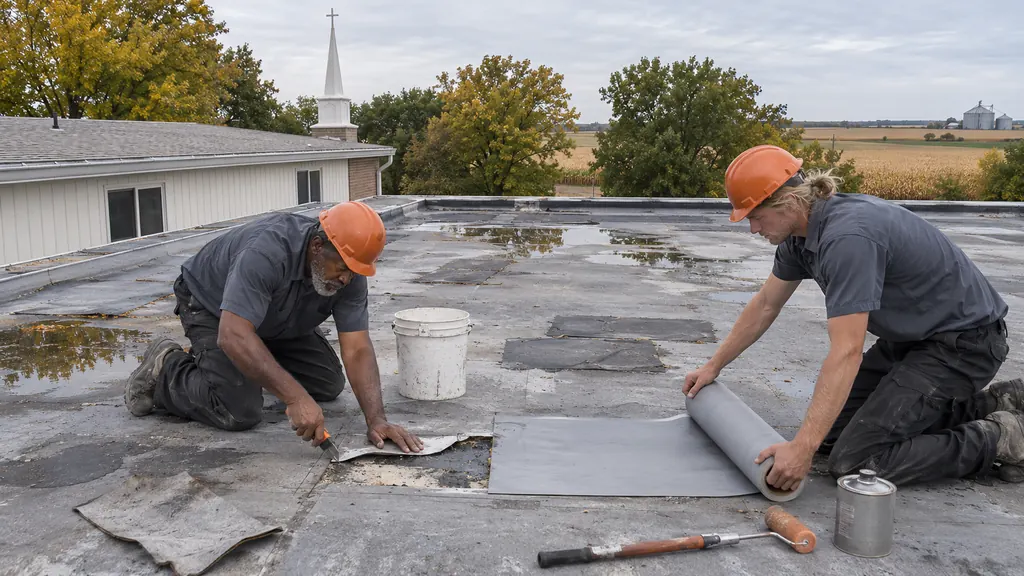
Patches are cut with round corners and sealed or heat-welded to the existing sheet. Built-up roofs get matching plies.
Flush
After the repair, drains are flushed and the patched area is checked for standing water before we leave the roof.
Related Services
Flat roof leaks often sit next to other problems. These services cover what we find around them.
Leaks with no clear source get a full trace from the ceiling stain back to the opening.
Roof leak repair in ColumbusMetal additions, canopies, and shop wings beside a flat roof get fastener and lap repairs.
Metal roof repair in ColumbusPlant roofs with fans, stacks, and pipe stands get curb and equipment flashing repairs.
Industrial roof repair in ColumbusFlat Roof Questions
Answers to what owners ask us on flat roofs. Permit questions point to the city's own rules.
Heavy rain backs up behind a slow drain until it reaches flashing set too low or pulled loose at a wall or curb. Light rain runs off before it gets that high. Clearing the strainer and resetting the flashing above the water line stops that pattern.
Small low spots get built up with tapered insulation or a cricket so water runs toward a drain. A sagging deck needs a structural look first. Large flat areas sometimes need another drain or a scupper. Water that sits more than two days wears the membrane faster.
A patch works when the damage is small and the board around it is dry. Punctures, short seam splits, and flashing gaps patch well. When patches keep failing, the membrane cracks when folded, or wet board spreads across bays, replacement is the honest answer.
We remove the strainer and clamping ring, clean the bowl, and check the membrane seal under the ring. Torn membrane is replaced, the ring goes back with new sealant, and a broken strainer gets swapped. A drain sitting high gets the area around it rebuilt.
Exhaust vents, overhead door headers, and wall flashing take the wear on a garage roof. We seal the vent penetrations, rebuild flashing that has pulled away above the doors, and patch membrane worn by heat. Work is scheduled so trucks keep moving in and out.
Under the city's code amendments, a permit expires if work has not started within 180 days, and permitted work has to be finished within two years unless the building official extends it. The Columbus Building Department can tell you whether your repair needs a permit at all.
Tell us where the water shows and what the roof is made of. We will walk it, core it where needed, and send photos.